


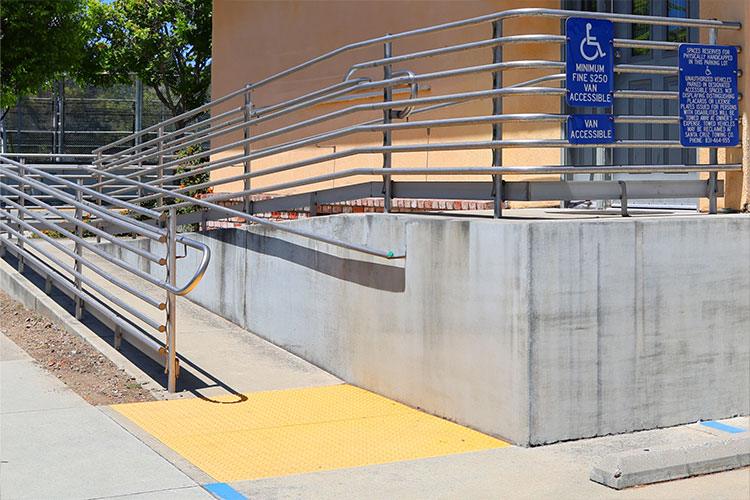
An ADA (Americans with Disabilities Act) claim against a property owner typically arises when a commercial or multi-family property does not comply with the accessibility requirements set by the ADA, leading to discrimination against people with disabilities. Under the ADA, businesses, landlords, and public facilities must ensure that individuals with disabilities have equal access to services, goods, and amenities. If a property owner fails to meet these standards—such as not having wheelchair ramps, accessible restrooms, or proper signage—someone affected by these barriers may file a claim to seek corrective action.
Claims often occur when someone with a disability is unable to enter, navigate, or fully use a space due to architectural or operational barriers. For example, if a retail store has steps but no ramp or elevator for wheelchair users, or a restaurant fails to provide adequate seating for individuals with mobility challenges, the property owner could face a claim. Businesses and property owners must make “reasonable accommodations,” which means adjusting policies, practices, or infrastructure to allow equal access without causing undue hardship to the business.
Are “ADA Testers” allowed?
Yes, ADA testers—people who investigate whether businesses comply with the Americans with Disabilities Act—can file lawsuits against property owners for violations. These testers, often working for disability rights organizations, visit businesses and public spaces to check for accessibility barriers, even if they are not personally affected by them. Courts have ruled that testers can have legal standing in ADA cases, meaning they can sue even if they didn’t attempt to use the property for their own needs.
The idea behind tester lawsuits is to encourage compliance with ADA regulations and ensure that businesses follow accessibility laws. Property owners who fail to meet standards can face lawsuits that result in fines, required modifications, or settlements.
If a claim is filed, the property owner may be required to correct the accessibility issue, pay fines, or compensate the affected individual. ADA claims can be resolved through negotiations, lawsuits, or enforcement actions by government agencies like the Department of Justice (DOJ). Some cases result in settlements where businesses agree to modify their properties to comply with accessibility laws.
What Our Lawyers Can Do to Help Defend Against ADA Lawsuits:
Our law firm can play a crucial role in defending a property owner against an ADA lawsuit by first reviewing whether the alleged violations are legitimate. We work with architects, engineers and contractors to review the claimed violations. Our attorneys thoroughly examine the property, relevant ADA regulations, results of our experts, and the specific claims made by the plaintiff or tester. If the lawsuit is based on minor or technical violations, such as signage issues or outdated accessibility features, our law firm may argue that the violations do not substantially hinder accessibility. Our lawyers also assess whether the property owner qualifies for exemptions under the ADA, such as cases where compliance would cause undue hardship due to financial constraints or structural limitations.
Not all ADA claims should be fought! And most can be resolved rather expeditiously.
If litigation proceeds, our lawyers can defend the property owner in court or negotiate settlements. In many ADA cases, businesses can resolve claims by agreeing to make reasonable modifications rather than paying large damages. Our attorneys can work to minimize costs by negotiating practical solutions, securing extensions for compliance, or proving that the property owner had already begun addressing accessibility concerns. If the plaintiff is a tester—a person who visits businesses solely to seek out violations—we may challenge their legal standing to sue, arguing that no actual harm was suffered.
Beyond direct legal defense, our law firm’s attorneys can also help prevent future claims by advising the property owner on compliance measures. We can assist in conducting accessibility audits, implementing necessary improvements, and documenting good-faith efforts to follow ADA guidelines. By taking proactive steps, property owners can reduce legal risks while demonstrating their commitment to accessibility. Do you have an ADA claim against you that you would like legal representation for?
Housing Discrimination Claims.
A housing discrimination claim against a landlord occurs when a tenant or prospective renter alleges that they were treated unfairly based on protected characteristics such as race, gender, disability, religion, national origin, familial status, or other legally recognized factors. In the United States, these protections come from the Fair Housing Act (FHA) and various state and local laws. If a landlord refuses to rent to someone, charges different rates, denies reasonable accommodations for disabilities, or takes retaliatory actions, they could face legal consequences.
Examples of housing discrimination include refusing to rent to a tenant because of their race, denying accessibility modifications for someone with a disability, or imposing stricter lease terms on families with children. Discrimination can also be more subtle, such as steering tenants toward certain properties based on their background or selectively enforcing rules. If a tenant suspects unlawful treatment, they can file a complaint with agencies like the U.S. Department of Housing and Urban Development (HUD) or take legal action in court. Also, in many Counties or Cities, they have enacted a commission where a complaint for housing discrimination can be lodged. The municipal agency will investigate and render an opinion. While the opinion may not be binding, it could be used by a tenant, or prospective tenant, in a court action against the landlord for housing discrimination. Moreover, there could be other legal consequences such as negative implications for financing or when city approval is needed for some permit or action by the landlord.
Landlords accused of discrimination have the opportunity to defend themselves by proving legitimate, nondiscriminatory reasons for their actions, such as a tenant’s rental history or financial qualifications. However, proving discrimination often comes down to evidence like witness statements, landlord policies, or documented patterns of unfair treatment. If violations are found, landlords can face fines, lawsuits, or requirements to change their rental practices. Would you like guidance on how to file or respond to a housing discrimination claim? Our law firm can help you!
Our law firm can provide crucial support for a property owner facing a Fair Housing Act (FHA) discrimination lawsuit by first analyzing the claims and determining whether the allegations have any merit. We will carefully review the applicable policies, rental practices, and any interactions with the tenant or applicant who filed the lawsuit or made the claim for housing discrimination. If the landlord acted within legal guidelines or criteria—such as enforcing neutral rental qualifications or denying a tenant for non-discriminatory reasons—our attorneys can build a strong defense. Additionally, we will examine whether the complainant has sufficient evidence to prove discrimination occurred, often questioning inconsistencies in their claims.
During legal proceedings, our lawyers represent the property owner in court, administrative hearings, or settlement negotiations. If the case goes to trial, our lawyers will present arguments, cross-examine witnesses, and introduce documentation showing that the landlord or prospective landlord did not engage in discriminatory practices. In some situations, we may demonstrate that the alleged violation was based on legitimate business concerns rather than unlawful bias. If the lawsuit seems likely to be resolved outside of court, our attorneys can negotiate settlements that minimize financial damages and help the landlord take corrective actions without admitting wrongdoing.
Beyond litigation, our law firm can help property owners prevent future discrimination claims by advising on compliance with fair housing laws. Our lawyers may assist in updating rental policies, providing anti-discrimination training for staff, and ensuring that advertising and tenant screening procedures align with legal standards. By proactively addressing these issues, landlords can reduce their legal risks while fostering inclusive and fair housing practices. If needed, our attorneys may also work with government agencies to clarify regulations and demonstrate good-faith efforts toward compliance.
